Starting Solid Foods: A Complete Guide for First-Time Parents
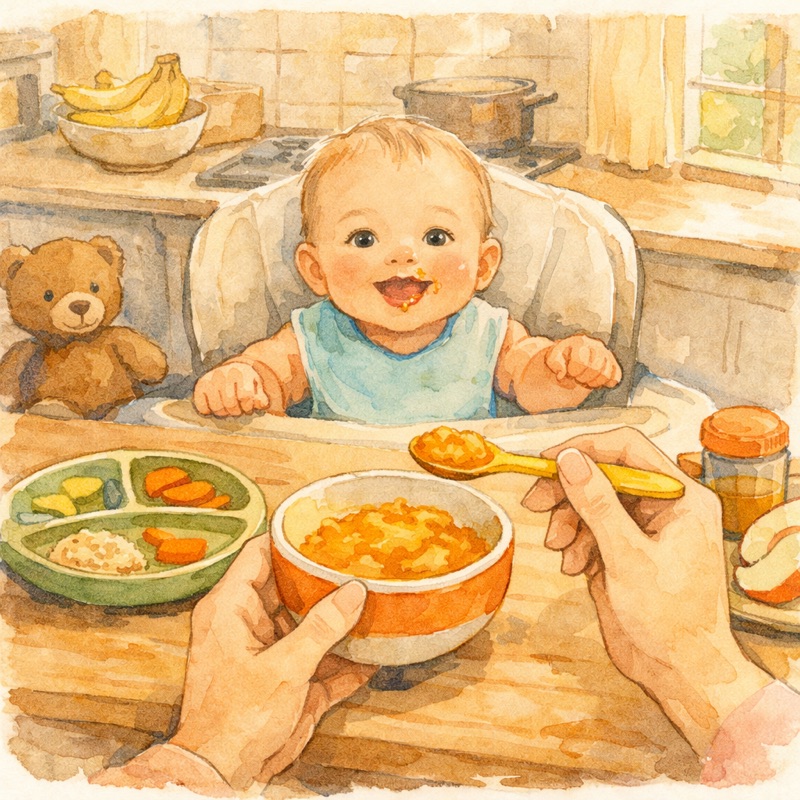 If you’re approaching your baby’s 6-month milestone, you’re probably wondering when and how to introduce solid foods. This transition can feel overwhelming, but with the right information, you’ll be confident in helping your baby discover new tastes and textures.
## When Should You Start Solid Foods?
Most pediatricians, including the American Academy of Pediatrics (AAP), recommend introducing solid foods around 6 months of age. However, every baby develops differently. Look for these key readiness signs:
**Physical readiness indicators:**
- Your baby can sit up with minimal support
- They have good head and neck control
- They show interest in food (watching you eat, reaching for your plate)
- The tongue-thrust reflex has diminished (they no longer automatically push food out with their tongue)
- They can move food from the front to the back of their mouth
- Their weight has doubled since birth
Starting too early (before 4 months) can increase the risk of choking and may interfere with proper nutrition from breast milk or formula. Starting too late (after 7-8 months) might make it harder for babies to accept new textures and could lead to nutritional deficiencies.
## First Foods: What to Offer
The traditional approach was to start with single-grain cereals, but modern pediatric guidance is more flexible. You can start with virtually any single-ingredient food, as long as it’s properly prepared.
**Excellent first foods include:**
- Iron-rich foods (pureed meat, iron-fortified cereals, lentils)
- Mashed avocado
- Sweet potato or regular potato
- Banana
- Pureed peas or green beans
- Oatmeal mixed with breast milk or formula
**Texture matters.** Start with smooth purees and gradually increase thickness as your baby becomes comfortable. By 8-9 months, most babies can handle mashed or minced foods with soft lumps.
## The Three-Day Rule
When introducing any new food, follow the three-day wait rule. Offer the same single-ingredient food for three days before introducing another new food. This helps you identify potential allergic reactions or sensitivities.
**Watch for these allergic reaction signs:**
- Rash or hives
- Swelling of lips, face, or tongue
- Vomiting or diarrhea
- Coughing or wheezing
- Difficulty breathing (call emergency services immediately)
Most food allergies appear within minutes to two hours after eating.
## Common Allergenic Foods: Don’t Delay
Medical research has shifted dramatically on this topic. Earlier introduction of allergenic foods (between 4-6 months, once solid foods have begun) may actually reduce allergy risk.
**The “Big 8” allergens to introduce early:**
- Peanuts (as thinned peanut butter or peanut powder mixed into puree)
- Eggs
- Milk/dairy products
- Tree nuts
- Fish
- Shellfish
- Wheat
- Soy
If your baby has severe eczema or existing food allergies, consult your pediatrician before introducing these foods. They may recommend introducing them under medical supervision.
## Foods to Avoid in the First Year
While you can offer most foods, some items should wait:
**Never give to babies under 12 months:**
- Honey (risk of infant botulism)
- Cow’s milk as a drink (though yogurt and cheese are fine after 6 months)
- Choking hazards: whole grapes, hard raw vegetables, nuts, popcorn, hard candy
**Limit or avoid:**
- Added sugar and salt
- Processed foods
- Juice (offers little nutrition and can cause tooth decay)
## Baby-Led Weaning vs. Purees: Which Approach?
There are two main philosophies for introducing solids:
**Traditional puree method:** You spoon-feed your baby smooth, pureed foods and gradually increase texture.
**Baby-led weaning (BLW):** Your baby self-feeds soft, appropriately sized finger foods from the start, skipping purees entirely.
Many families use a combination approach. Both methods work well. Choose based on your comfort level and your baby’s development. BLW requires strong sitting skills and good hand-eye coordination.
## How Much Should Your Baby Eat?
In the beginning, solid foods are about exploration, not nutrition. Breast milk or formula remains your baby’s primary food source until 12 months.
**6-8 months:** Start with 1-2 tablespoons once or twice daily. Gradually increase to 2-4 tablespoons, 2-3 times per day.
**8-12 months:** Offer 3 small meals plus 1-2 snacks. Portions are typically 2-4 tablespoons per food, but let your baby’s appetite guide you.
Never force your baby to finish food. They have excellent natural appetite regulation. Pressuring them to eat more can interfere with this.
## Practical Feeding Tips That Actually Help
**Create a routine.** Offer solids at roughly the same times each day, ideally when your baby is alert and happy, not overtired or starving.
**Make it social.** Let your baby join family mealtimes. They learn by watching you eat.
**Expect mess.** Spread a mat under the high chair and keep cleanup supplies nearby. Mess is part of learning.
**Let them touch food.** Babies explore through all their senses. Let them squish, smear, and play. This sensory experience is important for accepting new foods.
**Stay calm during gagging.** Gagging (loud, active response) is different from choking (silent, unable to breathe). Gagging is a normal protective reflex as babies learn to eat. Stay nearby and calm, but don’t interfere unless they’re truly choking.
**Offer variety.** Rotate through different vegetables, fruits, proteins, and grains. Varied early exposure may reduce picky eating later.
## Iron and Nutrition
After 6 months, babies need additional iron. Breast milk alone doesn’t provide enough. Focus on iron-rich foods:
- Pureed or minced meat (beef, chicken, turkey, pork)
- Iron-fortified cereals
- Lentils and beans
- Tofu
- Iron-rich vegetables (spinach, peas)
Pair iron-rich foods with vitamin C sources (like mashed sweet potato or pureed berries) to enhance iron absorption.
## Water and Cups
Once solids begin, offer small amounts of water in a cup (not a bottle) with meals. Start with just 2-4 ounces per day. This isn’t for hydration—breast milk or formula still handles that—but to help babies learn cup skills and rinse their mouth after eating.
Avoid juice. It’s high in sugar, low in nutrients, and can contribute to tooth decay and obesity.
## When to Worry
Contact your pediatrician if:
- Your baby refuses all foods for several days
- They show signs of allergic reaction
- They’re not gaining weight appropriately
- You notice blood in their stool
- They consistently gag or vomit with eating
- They haven’t shown interest in food by 8 months
## Final Thoughts
Starting solid foods is a milestone that brings excitement and mess in equal measure. Remember that every baby develops at their own pace. Some take to solids immediately, others take weeks to show interest. Both are normal.
Your job is to offer a variety of healthy foods in a safe, pressure-free environment. Your baby’s job is to decide whether and how much to eat. Trust the process, embrace the mess, and enjoy watching your little one discover the wonderful world of food.
The journey from milk to meals is just beginning—and it’s one of the most rewarding parts of parenting.


댓글
댓글 쓰기