How to Build a Baby Bedtime Routine That Actually Works (Even for Exhausted Parents)
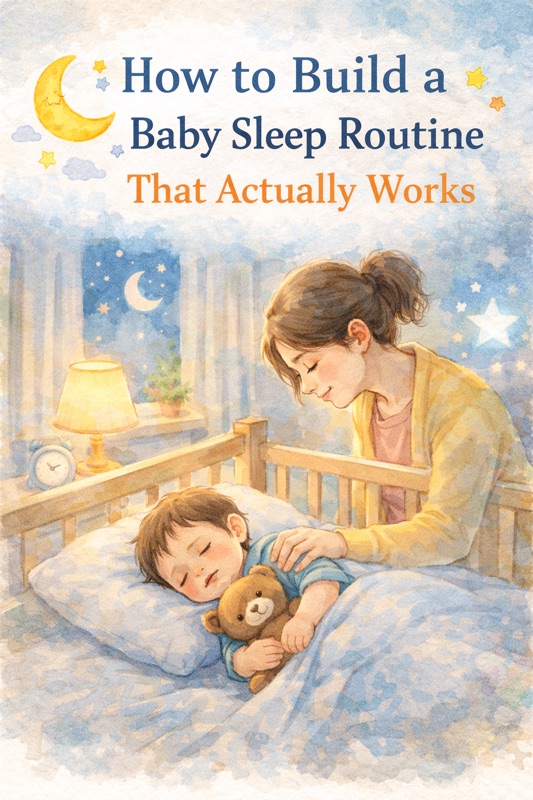 If you’re reading this at 10 PM wondering why your baby is still wide awake and full of energy, you’re not alone.
Building a consistent bedtime routine is one of the most talked-about topics in parenting — and also one of the most misunderstood. Most advice out there makes it sound simple. “Just do the same things in the same order every night.”
But nobody tells you what to do when your baby cries through the whole thing. Or skips naps. Or decides that 11 PM is party time.
I’ve been there. And after months of trial and error, I want to share what actually worked — and what didn’t.
Why a Bedtime Routine Matters More Than You Think
Babies can’t read clocks. They don’t know the difference between 7 PM and midnight. But they are incredibly sensitive to patterns and cues.
A consistent bedtime routine works like a signal to your baby’s brain: sleep is coming. Over time, those same familiar steps — bath, feed, song, darkness — start to trigger the body’s natural sleep response.
Research from the American Academy of Sleep Medicine shows that babies who follow a consistent bedtime routine fall asleep faster, wake up less often at night, and sleep longer overall.
That’s not a small difference. That’s life-changing.
When Should You Start a Bedtime Routine?
You can start earlier than you think.
Most sleep specialists recommend introducing a simple routine somewhere between 6 and 8 weeks of age. It doesn’t need to be complicated at this stage — just two or three predictable steps done in the same order every night.
By 3 to 4 months, your baby’s circadian rhythm starts to develop, and a routine becomes even more effective.
The earlier you start, the easier the habit is to build. But if your baby is already 6 months or older and you haven’t started yet — don’t worry. It’s not too late. Babies adapt faster than you’d expect.
What Time Should Bedtime Be?
For most babies between 2 and 12 months, the ideal bedtime falls somewhere between 6:30 PM and 8:00 PM.
That might sound shockingly early, especially if you’re a working parent who doesn’t get home until 6. But here’s the thing: an overtired baby is actually harder to put to sleep, not easier.
When babies are kept awake past their natural sleep window, their bodies release cortisol — a stress hormone — to keep them going. That makes falling asleep and staying asleep much harder.
Watch for these sleepy cues to find your baby’s ideal bedtime window:
- Rubbing eyes or pulling at ears
- Yawning (though this can mean they’re already overtired)
- Staring blankly or losing interest in toys
- Getting fussy or clingy suddenly
When you see these signs consistently at around the same time each evening, that’s your baby’s natural sleep window. Build your routine so it ends right at that time.
A Simple Baby Bedtime Routine That Works
Here’s a straightforward routine you can adapt to your own family. The whole thing should take between 20 and 45 minutes.
Step 1: Dim the lights (about 45 minutes before bed)
Light is one of the most powerful regulators of the sleep hormone melatonin. Bright overhead lights signal to the brain that it’s still daytime.
Start dimming lights around the house about 45 minutes before you want your baby asleep. If possible, switch to lamps or warm-toned lighting. Avoid screens — the blue light they emit actively suppresses melatonin production.
Step 2: A warm bath (optional, but powerful)
A warm bath does two things. First, it’s a strong sensory cue that bedtime is coming. Second, it actually helps lower your baby’s core body temperature afterward — which is what naturally triggers sleepiness.
You don’t need to do this every single night. But if you include it, keep it calm and quiet. Avoid splashing games or stimulating play.
Step 3: Gentle massage or lotion
After the bath, a slow, gentle massage with baby lotion can be incredibly calming. Research has shown that infant massage reduces cortisol and promotes bonding between parent and baby.
Use slow, gentle strokes. Keep the room warm. Talk or sing softly.
Step 4: Fresh diaper and sleep clothes
Keep this step calm and quiet. Some parents use this time to sing a specific song that becomes associated with bedtime — a “sleep song” that the baby only hears during the routine.
Step 5: Final feed
Whether you’re breastfeeding or bottle feeding, a calm feed is a natural part of most baby bedtime routines. Try to keep your baby awake during this feed — you want them drowsy, not fully asleep.
If your baby falls asleep during every feed, try moving the feed slightly earlier in the routine (before the massage, for example) so there’s a small gap between feeding and the final sleep.
Step 6: A lullaby or short story
Even for very young babies who can’t understand words, the sound of your calm, familiar voice is deeply soothing. A short song or one simple board book is all you need.
Keep the room dark. Keep your voice low and steady.
Step 7: Put baby down drowsy but awake
This is the step that most parents struggle with — and it’s the most important one.
Putting your baby down while they’re still slightly awake (drowsy but not fully asleep) teaches them to fall asleep independently. If they always fall asleep in your arms and then wake up in the crib, it can feel disorienting and frightening.
You don’t have to do this perfectly from day one. It takes practice. But even working toward it gradually makes a significant difference over time.
Common Mistakes Parents Make
Mistake 1: Starting the routine too late.
If your baby is already overtired by the time you start, they’ll be harder to settle. Move the whole routine 30 minutes earlier and see if it helps.
Mistake 2: Skipping the routine on weekends.
Consistency is everything. Even one or two late nights can set back progress significantly for young babies.
Mistake 3: Making the routine too long or stimulating.
More steps don’t mean better sleep. Tickling, playing, or exciting activities right before bed send the wrong signals. Keep it calm, keep it short.
Mistake 4: Rushing through it.
The routine isn’t just about what you do — it’s about how you do it. Slow down. Breathe. Your baby can sense your energy. A rushed, stressed parent makes for a restless baby.
What About Naps? Do They Affect Bedtime?
Yes — a lot.
An overtired baby who has skipped naps will actually have a harder time falling asleep at night, not an easier time. The more overtired a baby gets, the more stimulated their nervous system becomes.
As a general rule:
- Newborns (0-3 months): No set nap schedule, sleep is largely unpredictable
- 3-6 months: 3 to 4 naps per day
- 6-9 months: 2 to 3 naps per day
- 9-12 months: 2 naps per day
- 12-18 months: Transitioning to 1 nap per day
Make sure the last nap of the day ends at least 1.5 to 2 hours before bedtime to allow enough sleep pressure to build.
How Long Until It Works?
Most families see real improvement within 1 to 2 weeks of consistent routines. Some see changes within just a few nights.
The key word is consistent. If you do the routine three nights, skip it, come back, skip again — your baby’s brain doesn’t have enough repetitions to form a reliable association.
Give it two full weeks before you decide it isn’t working.
When to Ask for Help
A bedtime routine won’t solve every sleep problem. Some babies have medical reasons for poor sleep — reflux, food sensitivities, ear infections, or developmental issues can all interfere with sleep.
If your baby:
- Seems to be in pain at bedtime
- Wakes up screaming multiple times every night after 6 months
- Hasn’t shown any improvement after 4 to 6 weeks of a consistent routine
…it’s worth speaking to your pediatrician to rule out any underlying issues.
Final Thoughts
Building a bedtime routine is one of the kindest things you can do for your baby — and for yourself.
It won’t be perfect right away. There will be nights when everything falls apart. Teething, illness, developmental leaps, travel — all of these will disrupt things temporarily. That’s normal. Just return to the routine as soon as you can.
You’re building a habit. And habits, once established, are powerful.
The night your baby starts going down easily, sleeping longer, and waking up rested — you’ll know it was worth every exhausted, uncertain evening that came before it.
You’ve got this.


댓글
댓글 쓰기